
The ATM That Speaks Every Currency: Why Foreign Exchange Is the Revenue Line You're Ignoring
 Twitter/X
A tourist walks up to your ATM with a wallet full of euros and a problem you cannot solve.
She needs dollars. Your machine dispenses dollars. Should be a clean match. Except she does not have a card she trusts to handle the conversion, or her bank charges a small fortune to do it, or she simply does not want to gamble on whatever exchange rate her issuer decides to apply three days from now. So she walks. And the surcharge you would have earned walks out the door with her.
Now multiply that by every international visitor who passes your machine between Memorial Day and Labor Day.
Here is the part most operators never stop to consider. A standard ATM treats a foreign visitor exactly like a local one. It dispenses local currency, collects a flat surcharge, and moves on. That is one revenue line on a customer who is worth two.
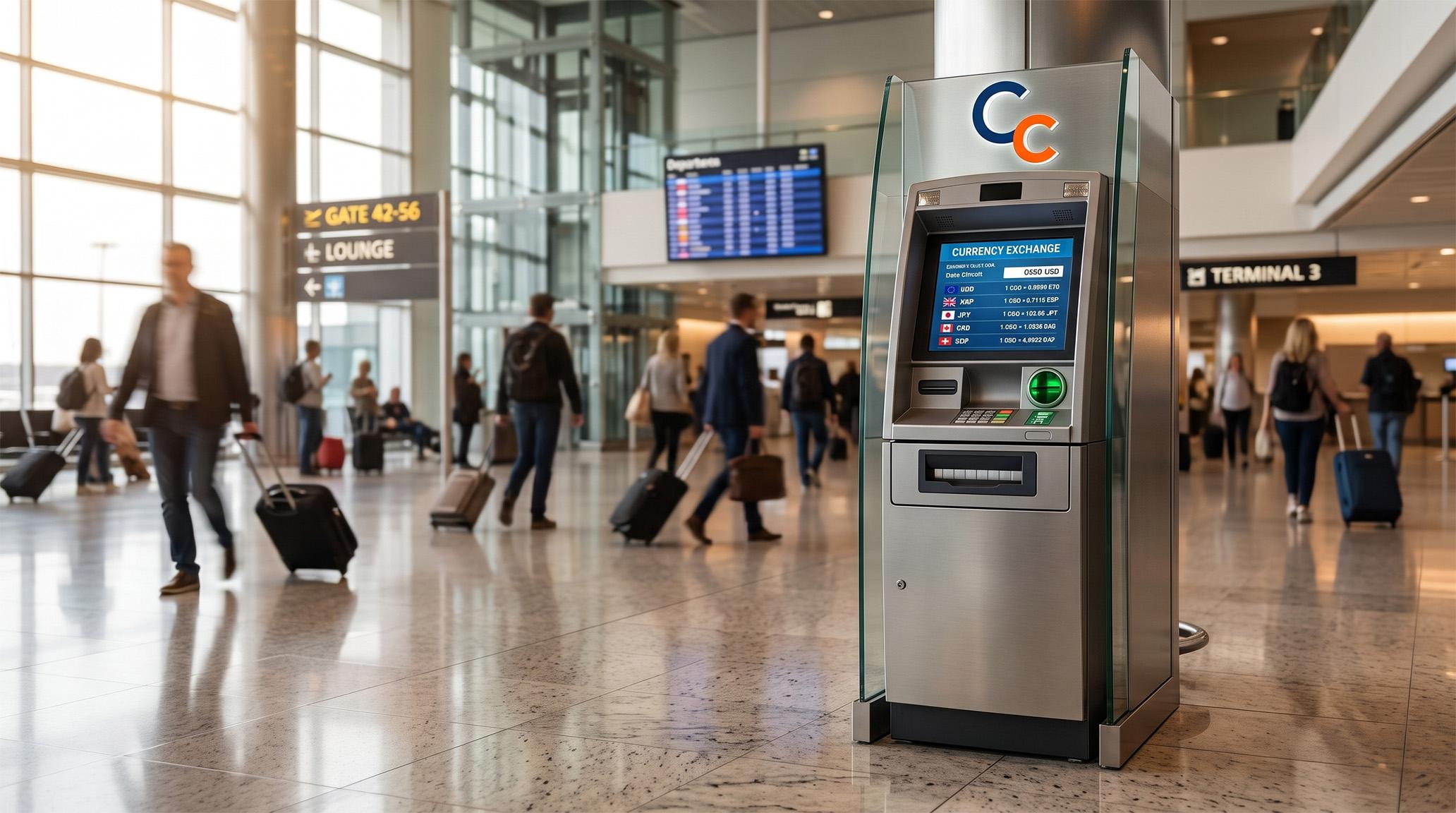
A foreign exchange ATM is built for the person standing in front of it holding the wrong currency. It lets that customer transact in terms they understand, in the currency they came with, without forcing them to trust a card network to settle the math later. The operator still earns the surcharge. The operator also earns a margin on the currency conversion itself. Same footprint. Same square of floor space you are already paying for. Two ways to get paid instead of one.
Here's the Move
Foreign exchange ATMs are not an airport-only product, and treating them that way is how operators leave the opportunity on the table. The real question is simpler: does international foot traffic pass your locations? If you place machines anywhere near hotels, tourist corridors, convention centers, border towns, entertainment districts, or transit hubs, the answer is almost certainly yes, and a standard ATM is quietly underperforming on every one of those visitors.
Consider a hotel near a busy convention center. A typical event week brings in a steady stream of international guests, many of whom arrive needing local cash and would rather not hunt for a bank branch. A standard ATM in that lobby earns a surcharge on the ones who use it. A foreign exchange ATM earns a surcharge plus a conversion margin on a much larger share of them, because it removes the reason the rest were walking past it. The hardware change is modest. The revenue logic is not.
Border markets tell the same story from a different angle. A machine within a few miles of a crossing serves a constant flow of people moving between two currencies in both directions, every day, all year, not just during a summer season. Entertainment districts and event venues concentrate the same demand into bursts: a festival, a tournament, a convention, each one delivering a crowd that arrived from somewhere else and needs local cash now. In every one of these settings, the visitor is not a rare exception you can afford to ignore. The visitor is a meaningful slice of the traffic, and a standard ATM is set up to capture only part of what that slice is worth.
There is also a service angle that matters more than it sounds. A visitor who can get cash easily, in their own currency, on day one, remembers where they did it. That machine becomes the one they come back to for the rest of the trip. Convenience compounds.
The catch with foreign exchange ATMs has never really been the concept. It has been deployment and support. Currency handling, rate management, and uptime on a more sophisticated machine are not things you want to figure out alone. That is the part Clear Choice handles. We do not just sell the machine and wish you luck. We deploy it, support it, and keep it running, so the second revenue line actually shows up instead of becoming a maintenance headache.
If your locations see travelers and your ATMs only speak one currency, you are running a machine built for half the customers walking up to it.