Your TMS Is Either Running Your Fleet or Quietly Costing You. There's No Middle.
 Twitter/X
Every ATM operator has a terminal management system. For some of you, it is enterprise software with a live fleet map. For others, it is a spreadsheet, a few sticky notes, and a genuinely impressive memory. Both count as a system. Only one of them scales.
That is the uncomfortable truth about terminal management. It is not optional. The only choice you actually get to make is whether your TMS is running your fleet, or quietly costing you on every machine you add. There is no middle setting where it does neither.
Most operators only notice their TMS when a compliance deadline lands. The MasterCard ZIP code update. The Visa journaling requirements. Suddenly every machine needs to change, and the question becomes how fast you can make that happen across the whole fleet. That moment is not really about the deadline. It is a test of the control layer you have been running all along.
Here's the Move
Stop thinking of terminal management as back-office plumbing and start treating it as the thing that decides whether growth stays controlled or turns into chaos. Here is what a real TMS actually does for you.
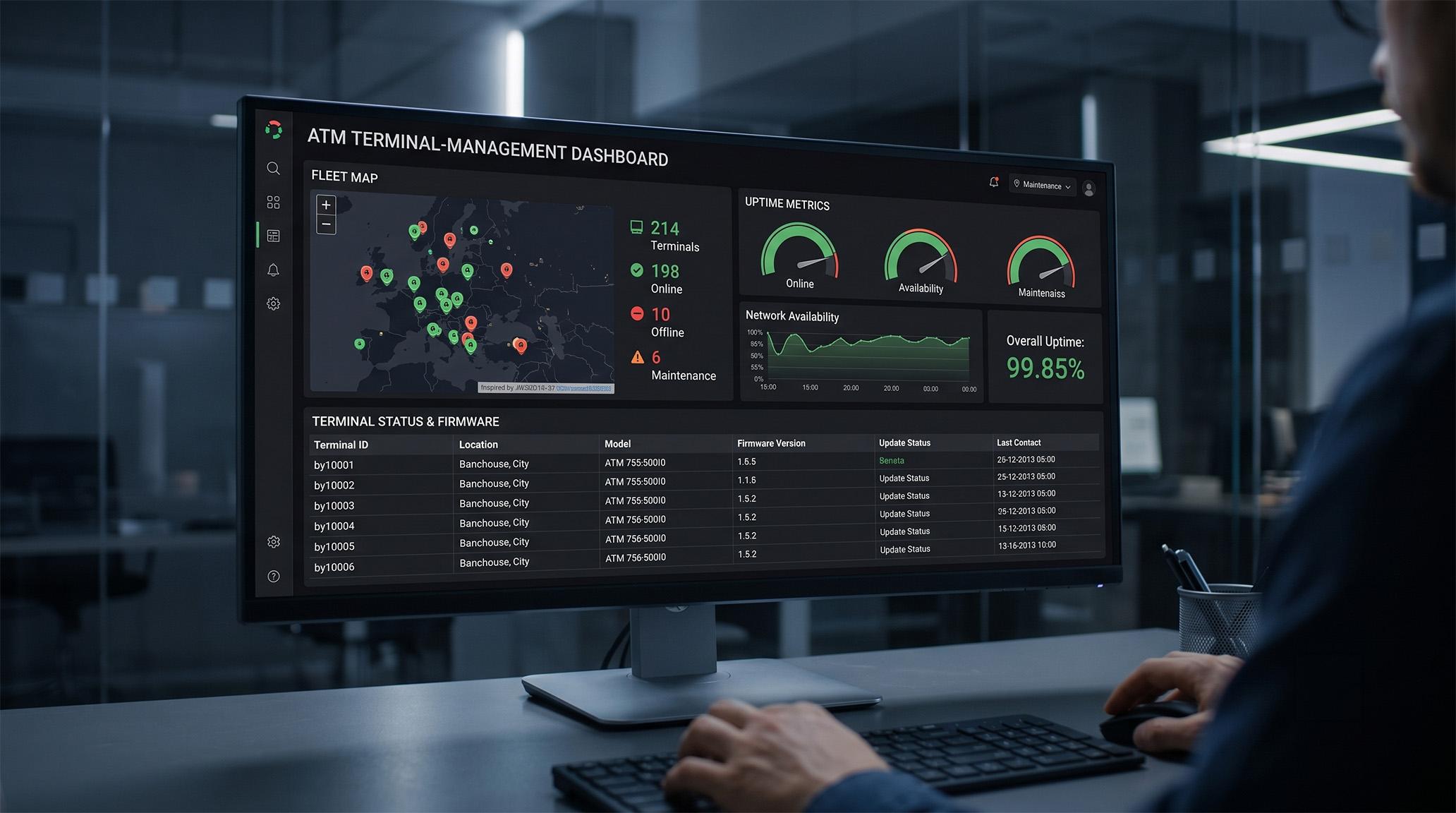
Remote configuration. Settings, screens, and parameters get pushed to machines from where you sit, not from the front seat of a truck parked at each location. The fleet bends to you instead of the other way around.
Firmware and compliance updates across the fleet. When a card network changes the rules, a real TMS lets you roll the update out network-wide and confirm it landed. The alternative is visiting machines one at a time and hoping you did not miss one.
Transaction visibility. You can see what every terminal is doing, which are earning, which are idle, which are throwing errors, without waiting for an end-of-day report to tell you yesterday's news.
Fleet-wide reporting. Performance, uptime, and exceptions across the whole portfolio in one view, so decisions about where to move machines or where to invest are based on data instead of gut feel.
Here is the contrast that makes it concrete. A network-wide compliance change comes down. With a real TMS, you push the update across the entire fleet in an afternoon and spend the rest of the day confirming green checkmarks. Without one, the same change becomes weeks of scheduling, driving, and manual updates, machine by machine, with the constant risk that one location got skipped and is now out of compliance without anyone knowing. Same requirement. Wildly different cost.
The ceiling is the part that catches operators by surprise. Manual terminal management feels fine at ten machines. It feels manageable at twenty. Then somewhere past that, the cracks show: a configuration that did not get pushed, a location that missed an update, a machine that has been throwing errors for a week because the report that would have flagged it lives in someone's head instead of on a screen. Growth did not create those problems. It just exposed the fact that the system was never built to hold more weight. A real TMS raises that ceiling, because adding a machine becomes a record in a system rather than one more thing a person has to remember to check.
That gap is the whole point. A weak TMS does not announce itself. It just shows up as truck rolls you should not have needed, compliance scrambles that should have been routine, and a ceiling on how many machines you can add before the wheels start coming off. The cost is real. It is simply invisible until you measure it against what good looks like.
Clear Choice's TMS is built for operators, not borrowed from a processor and handed down with whatever limits suit them. It is the control layer that lets a portfolio grow without growing harder to manage. If your terminal management today is mostly you remembering things, that is not a system you can scale. It is a risk you have not priced yet.
See what operator-built terminal management looks like. Book a demo at clearchoicepay.com/book-demo