
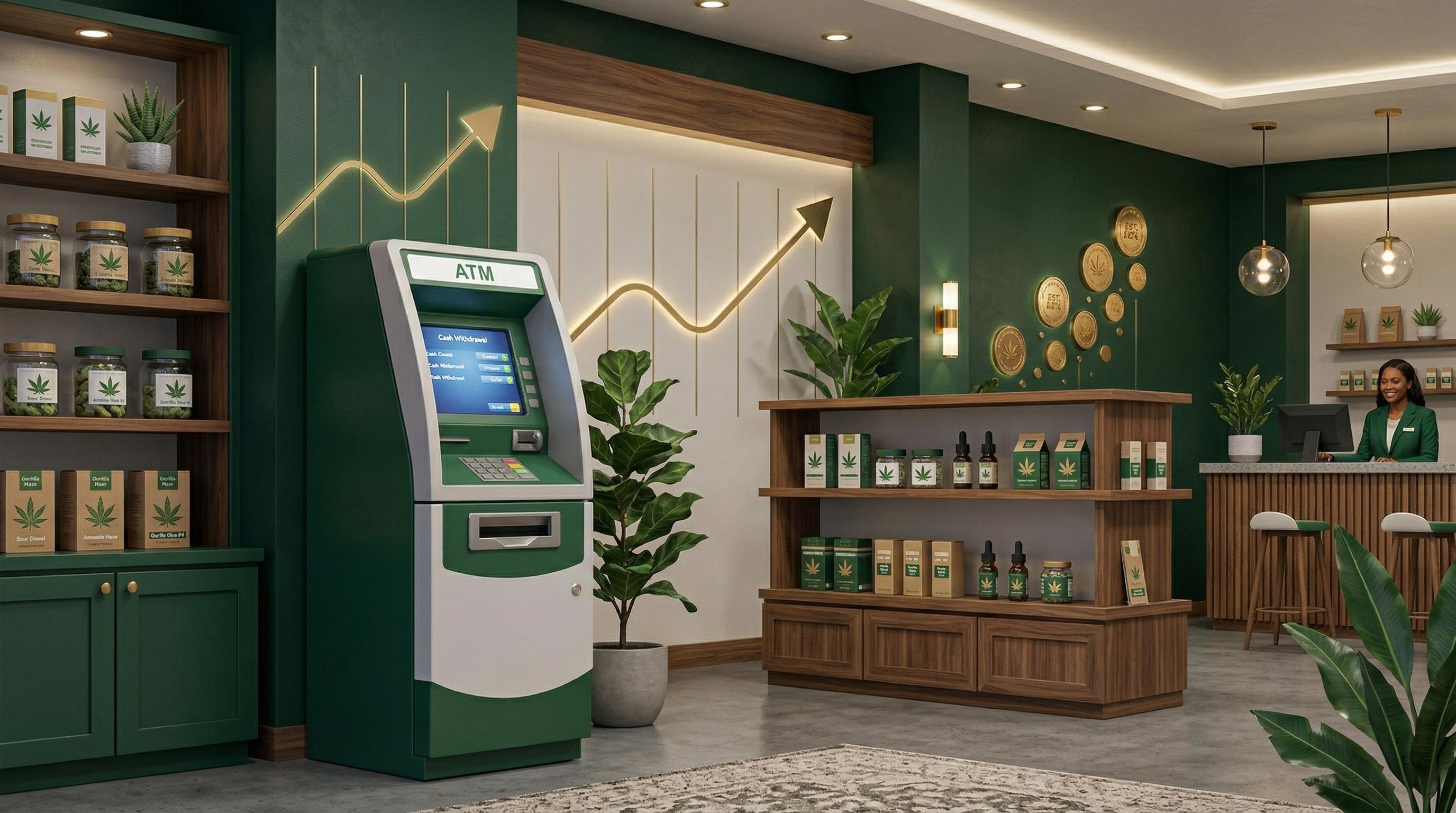
Why Your Dispensary Is Leaving Money on the Table Without an ATM
 Twitter/X
Cannabis retail operates under a unique set of financial constraints. Federal banking restrictions mean most dispensaries still rely heavily on cash. Credit card options are limited, often workarounds, and sometimes revoked without warning. Customers walk in expecting to pay — and if they don't have cash, they walk out.
That friction is costing you sales. And it has a straightforward fix.
An on-site ATM doesn't just solve a customer convenience problem. It creates a revenue stream. It increases average transaction values. It keeps customers in your store instead of sending them down the street to find a machine. For dispensaries that have done the math, the ROI is hard to argue with.
Here's how to think about it.
⸻
The Revenue Case Is Simple
An ATM generates revenue through surcharge fees — the amount customers pay per withdrawal. In a dispensary environment, where transaction volumes are high and average purchase amounts are meaningful, those fees add up quickly.
A dispensary processing 1,000 ATM transactions per month at a $3.50 surcharge generates $3,500 in gross ATM revenue. In a revenue-sharing arrangement with an ATM provider, the dispensary typically keeps 50% or more of that — $1,750 to $3,500 per month, often with no upfront equipment cost.
That's $21,000 to $42,000 annually in revenue your dispensary isn't currently earning.
Those numbers aren't hypothetical. They're consistent with what dispensaries of similar size see when they add an on-site machine. And they're on top of the indirect revenue effect: customers who have cash in hand spend more. Studies across retail formats consistently show that easy access to cash at the point of sale increases both transaction frequency and average order size.
⸻
Where Most Dispensaries Get This Wrong
The mistake isn't failing to recognize that an ATM would help. Most dispensary owners understand that intuitively. The mistake is in how the ATM is set up — or more specifically, who sets it up.
Using a generic ATM provider. Standard ATM companies are not equipped to serve cannabis businesses. Dispensaries operate under state-specific regulations around cash handling, transaction reporting, and compliance documentation. A generic provider won't understand these requirements. That creates risk — operational, financial, and regulatory.
Wrong placement. An ATM tucked away near a back exit doesn't drive the same results as one positioned in the waiting area or near the sales floor. Strategic placement keeps customers engaged with your space while they access cash. It removes the friction at the moment it matters most.
No revenue-sharing negotiation. Many dispensaries accept the first ATM offer they receive without understanding the revenue structure. Depending on transaction volume, there's often room to negotiate a better split — especially if you're bringing high traffic and a captive customer base to the table.
Ignoring the compliance layer. ATM compliance in cannabis retail is not the same as ATM compliance in a convenience store. State-level rules on cash handling, reporting thresholds, and audit trails are stricter. The machine you put on your floor needs to be set up by a provider who knows the difference.
⸻
What a Well-Structured ATM Setup Looks Like
The best outcomes we see with dispensary clients share a few common elements:
A placement agreement with no upfront equipment purchase. Revenue-sharing models can reduce the initial equipment burden for the dispensary. The provider supplies and maintains the machine. You supply the location and the traffic. Revenue is split based on transaction volume.
Real-time monitoring. Downtime is lost revenue. A well-managed ATM operates with remote telemetry — meaning issues are detected and addressed before customers encounter an out-of-order screen. Uptime matters.
Compliance-first setup. Your ATM provider should know exactly what your state requires for cash handling documentation, AML thresholds, and reporting. This isn't optional — it's the difference between a smooth operation and a liability.
Regular cash management. High-volume dispensaries cycle through cash quickly. The logistics of vault management and replenishment need to match your transaction pace. A provider who services your machine sporadically is a provider who creates unnecessary downtime.
⸻
Beyond the ATM: Building a Complete Cash Strategy
An ATM solves the access problem. But smart dispensaries pair it with a broader payment strategy.
Debit-based payment solutions — where compliant — can supplement ATM access and reduce customer friction at checkout. Loyalty programs that reward cash-paying customers can increase return visits. And cash discount programs that incentivize cash over card can align with your ATM setup to create a seamless, compliant payment ecosystem.
The goal isn't just to have an ATM on the floor. It's to build a payment environment that's good for your customers, good for your margins, and sound from a compliance standpoint.
⸻
The Bottom Line
The cannabis industry is maturing. Operators who built sustainable businesses during the early years of legalization did it by solving operational problems that their competitors ignored. Payment infrastructure is one of those problems — and the cost of ignoring it compounds every month.
An on-site ATM is not a complicated investment. It doesn't require capital. It doesn't require technical expertise. It requires the right partner and the right setup. The math on the revenue side is compelling. The compliance requirements are manageable with the right support.
If your dispensary doesn't have an ATM, you are leaving money on the table every single day. That's worth fixing this month.
Clear Choice Payment Solutions works specifically with cannabis businesses on ATM placement, cash management, and compliant payment infrastructure. Contact our team to learn what a setup looks like for your location.